Best Phone System for a Small Team in 2026: Why Per-Seat Pricing Punishes Micro-Teams
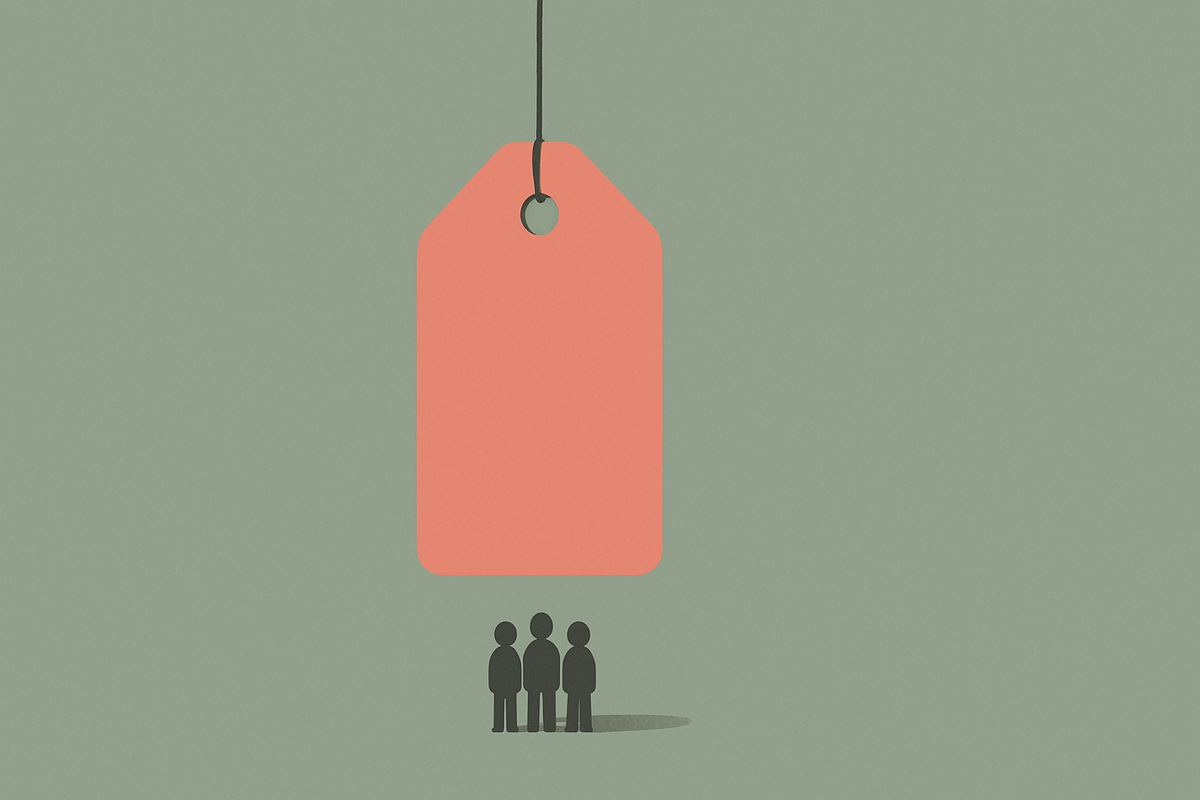
The top ten lists are written for enterprise buyers. If your team is 2 to 10 people, the real question isn't which tool has the most features. It's why you're paying for 30-user infrastructure in the first place.
Search "best phone system for small team" and you'll get the same article ten times. A 3,000-word listicle ranking RingCentral, Nextiva, Vonage, Dialpad, 8x8, GoTo, Zoom Phone, and five others you've never heard of. Halfway down, the "cheapest" tier starts at $30 per user and the "best value" one requires an annual contract. If you actually click through to the vendor, pricing quietly disappears behind "Contact Sales."
This is not a coincidence. The lists are written for a buyer who has 40 seats and a procurement team. If you have four employees and a shared line, none of it is written for you.
Here's the honest version.
The math nobody runs for micro-teams
Start with who's actually reading this. In the United States, 82% of small businesses are solo operations. Another 36% have between 2 and 5 employees. Only a small slice sits north of 20 [1]. That means the modal "small business phone buyer" is a team of one to five people, not the 25-seat call center every review site quietly assumes.
Now the pricing. RingCentral's entry plan runs $20 to $35 per user per month on an annual contract, and $30 to $45 if you pay month-to-month. Annual contracts typically lock you into a one to three year minimum, and if you miss the cancellation window, you renew for another full term [2]. Dialpad's Connect plans run $15 to $25 per user annually, or $27 to $35 monthly, and their entry SMB tier for their AI product is bundled differently again [3].
Do the math on a four-person team. On RingCentral's monthly plan, that's roughly $180 a month before add-ons. Add the E911 fees, regulatory taxes (typically 10-20% on top of service), number porting fees, and whatever tier upgrade you need to unlock SMS or auto-attendant, and you're closer to $220 [4]. All for a phone system that, if you're honest, will handle maybe 300 calls a month across the whole team.
You're paying enterprise infrastructure prices for a workload that fits in a shoebox.
The per-seat model was built for a different company
Per-seat pricing made sense when a "seat" meant a physical desk, a workstation, and a full-time person hammering the tool eight hours a day. It doesn't map to modern teams. The average enterprise now wastes about $21 million a year on unused SaaS licenses, and 66% of provisioned seats are never opened at all. License waste sits at an all-time high of 51% across the industry [5].
That waste isn't a small-business problem in raw dollars, but it's the same disease. When you're a five-person team and you buy six licenses because someone might come on next quarter, or you keep paying for an ex-employee's seat until the annual renewal, or you upgrade the whole team to unlock one feature one person needs, per-seat pricing quietly rewards the vendor for your inefficiency.
The industry knows. IDC projects 70% of software vendors will move away from pure per-seat pricing by 2028, driven partly by AI collapsing headcount and partly by buyers finally auditing what they're paying for [5]. But phone systems have been slow to catch on. Most of them still bill you for chairs you don't sit in.
What a small team actually needs
Cut through the feature checklists and a micro-team phone system really needs about seven things.
A business number (or a few) that rings on everyone's phone. Voicemail that gets transcribed so nobody has to listen. SMS from the business number, because customers now text more than they call. A simple auto-attendant or call routing for after hours. Call recording, ideally with a transcript, so you can remember what was said. Basic reporting on missed calls. And a way to see who called, when, and what happened, without opening four tabs.
Everything else on the enterprise feature grid (advanced IVR trees, supervisor dashboards, PCI-compliant payment IVR, twelve-tier permission structures) is noise for a five-person team. You will never use it, and you're paying for it anyway.
The three real questions to ask
Skip the feature bake-off. Ask these instead.
How does the vendor bill when someone leaves? If your bookkeeper quits mid-month, do you get a refund? On an annual contract, no. On monthly billing, you might get the current month back. On daily billing, you pay for the days they were active and stop the day they're gone. That difference matters more than any feature comparison.
What does the contract actually commit you to? Read the small print. Most "monthly plans" auto-renew, and most "annual discounts" require you to cancel in a specific 30-day window or they roll for another year. This is where the industry earns its reputation.
Are the AI features included or bolted on? Call transcription, summaries, and smart tagging are table-stakes now, but plenty of providers still charge separately for "AI insights." If you're paying $25 a seat and another $10 for AI, you're at $35 before taxes on a feature that should be baked in.
The pay-as-you-go alternative
There's a smaller category of providers doing this differently. Instead of a per-seat contract, you pay a flat base rate per active user, and only for the days that user is active. That's the model Tonet is built on: $10 per user per month with per-minute usage, or $15 per user unlimited, billed daily, no contract. If someone's out for two weeks, or you hire a seasonal helper for a month, or a role turns over, the bill reflects reality.
For a four-person team making moderate call volume, that shakes out to roughly $40 to $60 a month, all in. Same core features (AI transcription, recording, unified timeline, SMS, auto-attendant) as the enterprise tools. Different math because the pricing model isn't designed to over-serve you.
The takeaway
The best phone system for a team of 2 to 10 in 2026 is not the winner of some listicle. It's whichever provider bills you in a way that matches how your team actually operates. If you're evaluating options this quarter, ignore the feature checklist for ten minutes and read the pricing page instead. If it starts with "Contact Sales" or the cheapest plan requires an annual commit, it wasn't built for you.
Curious what a real pay-as-you-go phone system actually costs your team? Tell us your headcount in the comments and we'll do the honest math.
Sources:
[1] Backlinko (2026). Small business employment distribution statistics.
[2] Tech.co (2026). RingCentral pricing and contract terms.
[3] Dialpad (2026). Business phone system cost breakdown.
[4] Tech.co (2026). VoIP cost and hidden fee analysis.
[5] SaaS Magazine (2026). Death of per-seat pricing industry data.