Stop Fighting Interruptions. Start Planning for Them.
Small business owners and managers can't just close the door and go heads-down all day. Your team needs you. But every interruption costs 23 minutes of refocus time. The fix isn't blocking out more focus time. It's choosing better tasks for the hours when you're available.
You already know the advice. Block focus time on your calendar. Close Slack. Put your phone on Do Not Disturb. Work from home on Wednesdays.
And it works. For those two or three hours, you're productive. You get the hard thinking done.
But what about the rest of the day?
The other five or six hours, you're available. Your team can walk up and ask you something. A client calls. Someone on your crew needs a quick decision before they can keep moving. That's not a bug in your schedule. That's your job. Especially when you're running a small business where every person wears four hats and you're the one who knows where everything is.
The problem is that being available feels like being interrupted. Even when you genuinely want your team to come to you, even when you know that accessibility is what makes you good at your job, there's a small spike of frustration when someone taps your shoulder while you're mid-thought on something.
That frustration isn't about them. It's about what you chose to work on.
The 23-Minute Problem
Research from UC Irvine found that it takes an average of 23 minutes to fully regain deep focus after a single interruption [1]. Twenty-three minutes. If you get interrupted twice in an hour, you basically never reach full concentration.
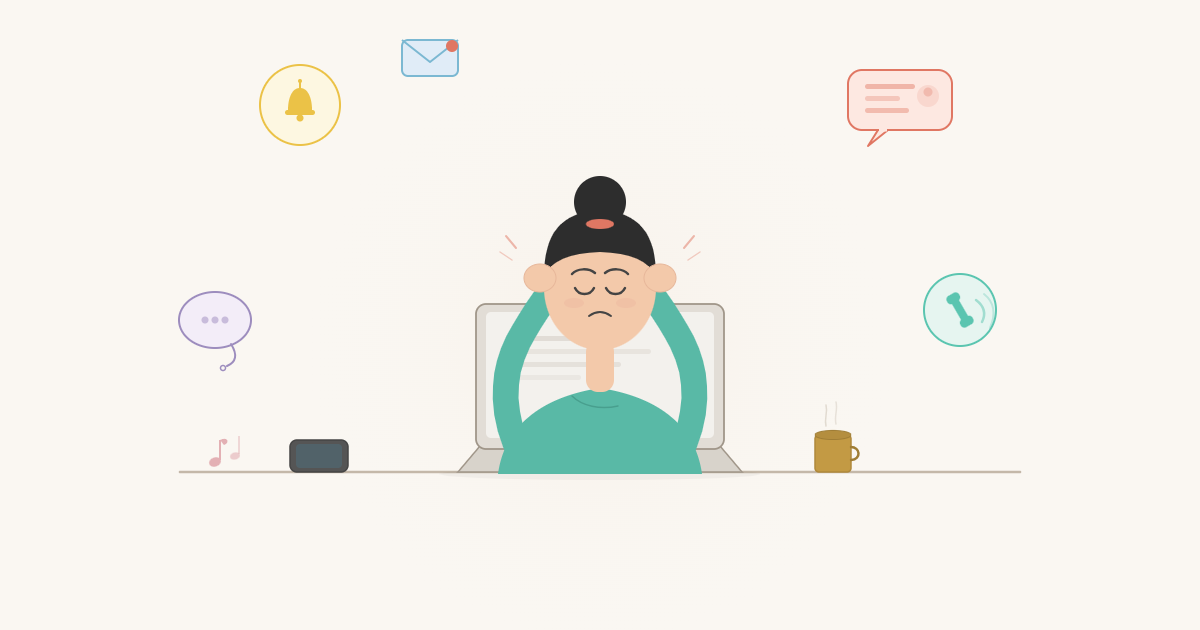
And the average knowledge worker gets interrupted roughly every three minutes during a typical workday [2]. Which means that attempting deep, creative, complex work during your "available" hours is setting yourself up for a bad time. You'll get pulled out of flow constantly, feel like you accomplished nothing, and resent the people who needed your help.
The math doesn't work. You can't do deep work and be available at the same time. Most people solve this by trying to carve out more focus time. But if you manage people or run a business, there's a ceiling on how unavailable you can be before things start breaking.
So instead of fighting for more closed-door hours, try a different approach: pick better tasks for the open-door hours.
Not All Tasks Are Created Equal
Look at your to-do list right now. Some of those tasks require real concentration. Writing a proposal. Reviewing financials. Building out a new process. Planning next quarter. If you get interrupted in the middle of those, it hurts. You lose your train of thought, and getting it back takes real effort.
But other tasks on that list? They're routine. You've done them before. They don't require much creative energy. Responding to straightforward emails. Updating a spreadsheet. Reviewing timesheets. Following up on invoices. Ordering supplies. Processing approvals.
These are your interrupt-friendly tasks.
Getting pulled away from an invoice follow-up doesn't cost you 23 minutes of refocus time. You pick it right back up. No lost train of thought, no frustration, no cognitive penalty.
The System
Here's how to put this into practice. It takes about 15 minutes to set up and almost no effort to maintain.
Tag your tasks. Go through your to-do list and mark which tasks are interrupt-friendly. Use whatever system works for where you keep your list. A color, a label, a hashtag, a category. The mechanism doesn't matter. What matters is that you can glance at your list and immediately see which tasks can handle a disruption.
Keep tagging as you add. When you add a new task, take two seconds to ask: would it bother me to get pulled away from this? If not, tag it.
Match tasks to your schedule. When you're in your available hours (which, for most small business owners, is most of the day), default to interrupt-friendly tasks. When you have a real block of focus time, that's when you do the deep work.
Prioritize normally, then filter. This isn't about doing easy tasks first. You still prioritize by importance and deadlines. But when two tasks are roughly equal priority, pick the one that's interrupt-friendly during your available hours. Save the concentration-heavy one for your next focus block.
That's it. No new app. No productivity framework with an acronym. Just a tag and a habit.
Why This Actually Matters
This isn't just about getting more done. It's about how you show up for your team.
When you're deep in a complex task and someone interrupts you, they can tell. Maybe you don't snap at them, but there's a pause, a shift in your body language, a slightly clipped response. They notice. And over time, they start hesitating before coming to you. They sit on questions longer than they should. They make decisions they shouldn't be making alone. They stop seeing you as approachable.
For a small business, that's dangerous. You need information flowing freely. You need your team comfortable asking questions early, before small problems become expensive ones.
When you're working on something interrupt-friendly and a team member walks up, it genuinely doesn't bother you. You look up, you're present, you handle it, and you go right back to what you were doing. That's not performance. That's the natural result of not being ripped out of deep concentration.
Your team gets a better version of you. You get less frustration. The work still gets done. Everyone wins.
The Small Business Reality
Big companies solve this with layers. They have middle managers to absorb questions, dedicated support channels, Confluence wikis for every process. A VP at a 500-person company can block four hours of focus time and nobody notices.
You don't have that luxury. In a five or ten-person operation, you're probably the manager, the subject matter expert, the decision-maker, and occasionally the person who fixes the printer. Your availability isn't optional. It's infrastructure.
So stop treating interruptions as the enemy of productivity. They're part of the job. The only question is whether you're doing the right work when they happen.
Tag your tasks. Match them to your schedule. Be available without paying a cognitive tax for it.
It's a small change. But the compounding effect of being less frustrated, more present, and still productive during your available hours is worth more than another blocked calendar slot you'll cancel anyway.
Sources:
[1] Gloria Mark, University of California Irvine, "The Cost of Interrupted Work". Research on attention recovery time following workplace interruptions.
[2] Microsoft, "2025 Work Trend Index". Data on interruption frequency, digital distractions, and their impact on knowledge worker productivity.